Comparing API Request Methods in a ReactJS Application
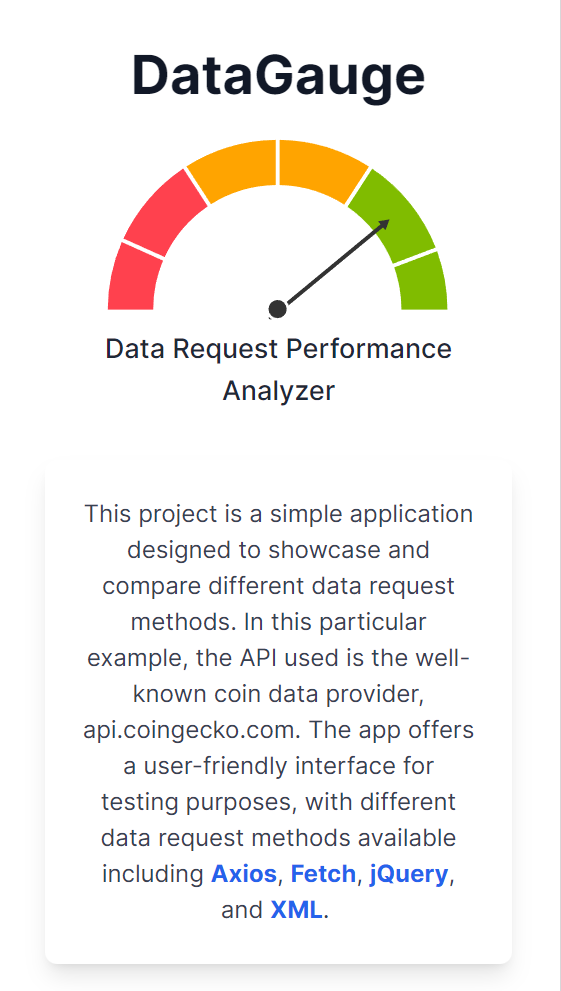
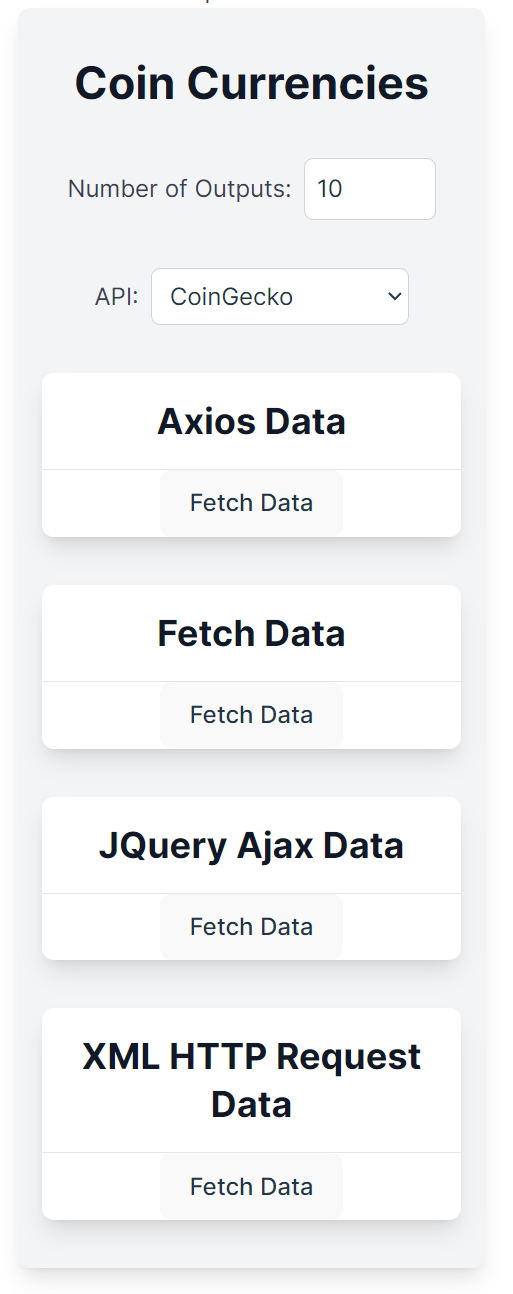
ReactJS application that demonstrates different methods for fetching data from APIs
ReactJS application that demonstrates different methods for fetching data from APIs
Introduction:
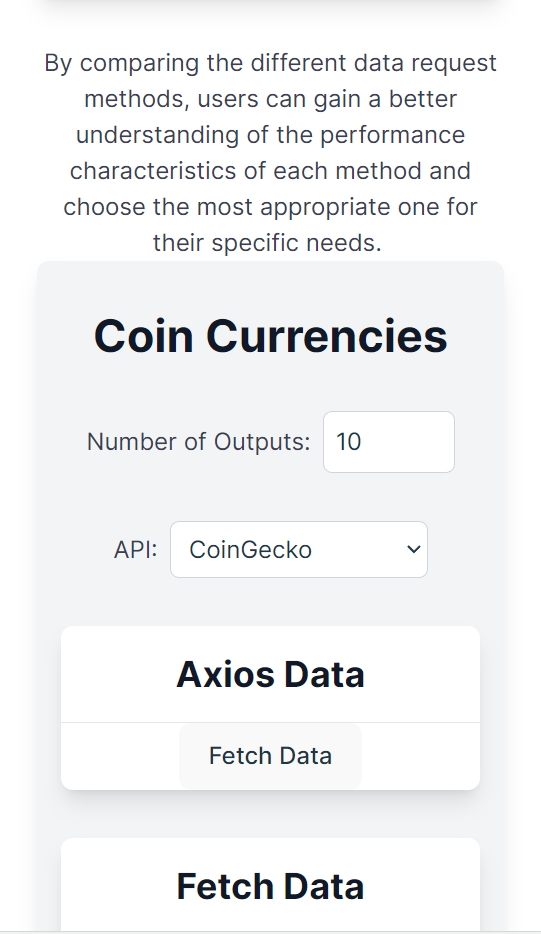
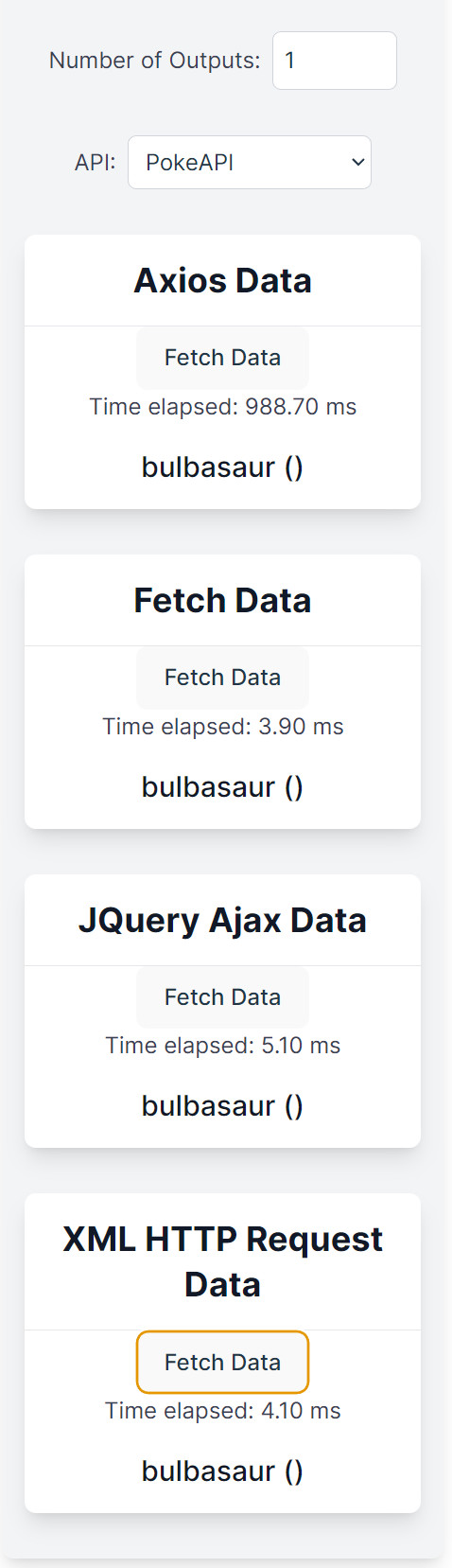
In this blog post, we will explore the implementation of a ReactJS application that demonstrates different methods for fetching data from APIs. We will compare the performance of Axios, Fetch, jQuery AJAX, and XMLHttpRequest methods, and assess their response times when fetching data from popular APIs like CoinGecko, PokeAPI, and JSONPlaceholder.
Technologies Used:
ReactJS: ReactJS is a popular JavaScript library for building user interfaces, particularly single-page applications. In this project, we use ReactJS to create the frontend of our web application.
Axios: Axios is a popular and lightweight JavaScript library used for making HTTP requests. It is Promise-based and can be easily integrated into ReactJS applications. In this project, we use Axios to fetch data from APIs.
Fetch API: Fetch is a built-in JavaScript API for making HTTP requests. It is Promise-based and widely supported across modern browsers. In this project, we use Fetch to fetch data from APIs.
jQuery AJAX: jQuery is a fast and lightweight JavaScript library that simplifies tasks like event handling, DOM manipulation, and AJAX. In this project, we use jQuery's AJAX method to fetch data from APIs.
XMLHttpRequest: XMLHttpRequest is an older method for making HTTP requests in JavaScript, and it is the underlying technology for jQuery's AJAX method. In this project, we use XMLHttpRequest to fetch data from APIs.
Demonstrated Skills:
API data fetching: This project demonstrates the ability to fetch data from APIs using various methods, such as Axios, Fetch, jQuery AJAX, and XMLHttpRequest. By comparing the response times of these methods, we can determine which method is best suited for a particular use case.
ReactJS application development: The project showcases the skills needed to create a ReactJS application from scratch. It involves designing the frontend, handling user input, and presenting the fetched data in a visually appealing manner.
Performance comparison: This project highlights the importance of assessing the performance of different methods for fetching data from APIs. By comparing the response times, we can make informed decisions about which method to use for optimal performance.
Conclusion:
In this blog post, we have discussed the process of creating a ReactJS application that compares the performance of different methods for fetching data from APIs. This project demonstrates the versatility of ReactJS in building interactive web applications and showcases the various ways to fetch data from APIs using Axios, Fetch, jQuery AJAX, and XMLHttpRequest. By leveraging these technologies, you can build data-driven applications that can adapt to different requirements and performance needs, showcasing your skills in web development, API data fetching, and performance analysis.
🔗 GitHub repository: https://github.com/peterpapas/Avatar_Generator
🔗 Live version: https://earnest-lebkuchen-cc0dd1.netlify.app
GitHub repository:
Live version: